The Mediterranean influence at Lunaya: from Capri sketches to Marbella warmth
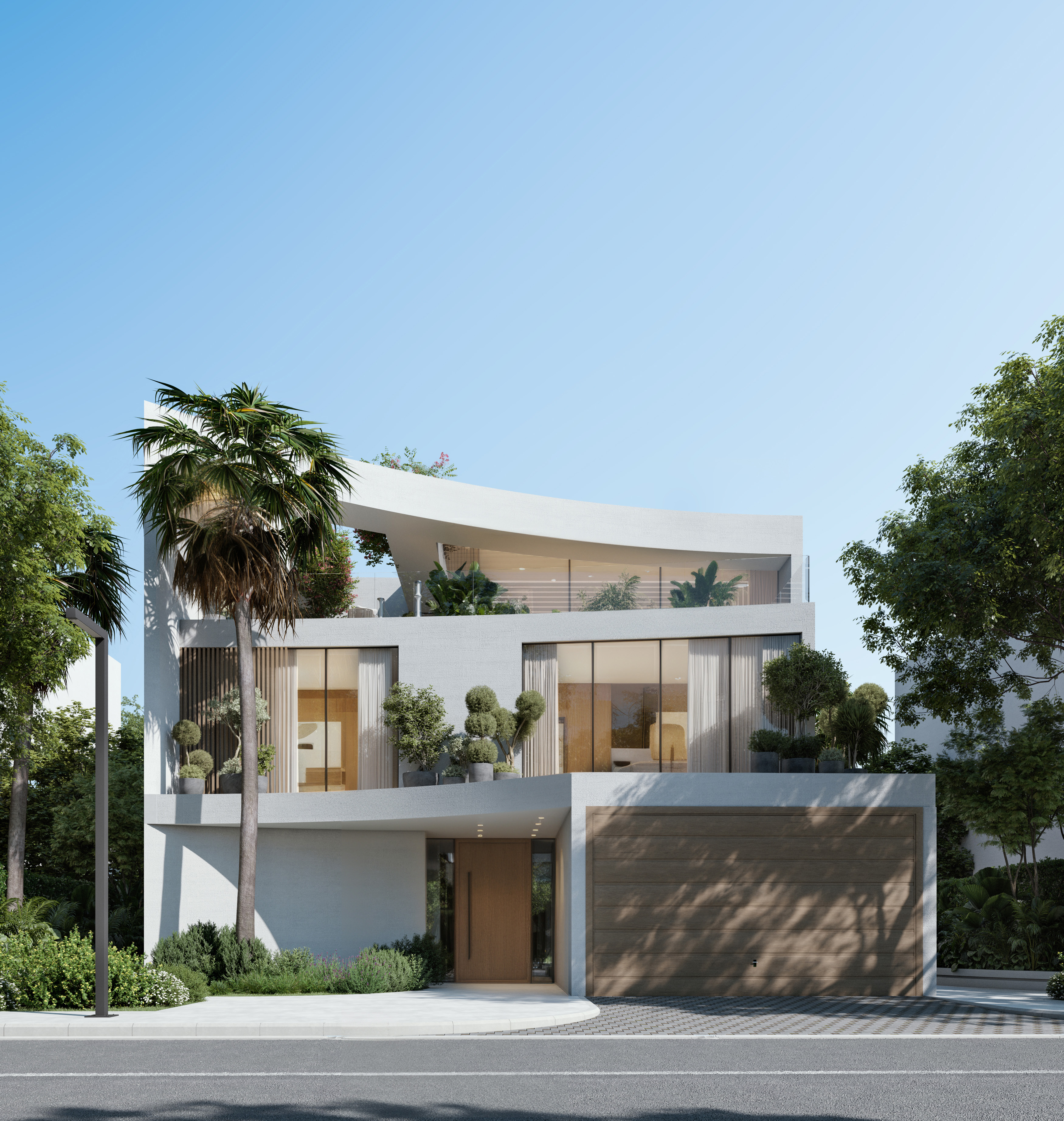
Most Dubai villas are written in the same vocabulary: monolithic volumes, dark glass, sharp angles, marble in every direction. Lunaya by ZAYA takes a different route. The architects opened their reference book on the northern Mediterranean and worked from three specific anchors: the modernist white villas of Capri, the stone-and-oak warmth of the Marbella hills, and the layered terraces of inland Provence. The result is a contemporary Mediterranean villa transposed to Saih Shuaib 1, with materials and proportions that age slowly and read calmly.
Capri: the modernist white volume
Capri is not a single architectural moment. The island carries a quiet thread of mid-century modernist villas, often perched above the sea, that married whitewashed plaster volumes with deep loggias and horizontal openings. Names like Bernard Rudofsky and Edwin Cerio shaped a vocabulary that the Lunaya team studied closely: low-rise volumes, white or stone-toned facades, generous shaded outdoor rooms, and a refusal of decorative excess.
The Capri thread shows up at Lunaya in three places. First, the proportions of the villa elevations stay horizontal rather than vertical, with eave lines that cap the building at human scale. Second, the use of light, almost limestone-toned facades replaces the dark cladding common in Dubai prime. Third, the loggia logic returns: every typology offers a deep, shaded outdoor room directly connected to the main living space, so the threshold between inside and outside reads as a gradient, not a wall.
Marbella: stone, oak and the warmth of the hills
If Capri brings the volume, Marbella brings the material warmth. The hill villas above Puerto Banus and La Zagaleta built a signature on a tight palette: warm beige stone for the load-bearing walls, oak for the joinery and ceilings, terracotta and travertine for the ground planes. The combination produces interiors that absorb light rather than bouncing it, and that age into patina rather than wearing out.
Lunaya picks up that palette directly. Light stone runs across the main facades, oak frames the openings and lines the ceilings of the principal living spaces, and the floors transition from warm travertine in the social zones to softer materials in the bedrooms. The choice is deliberate against the Dubai standard of cold marble and chrome: the buyer who wants a residence that feels like a long-term home, not a hotel lobby, recognises this palette immediately.
Provence: the layered terrace and the garden as a room
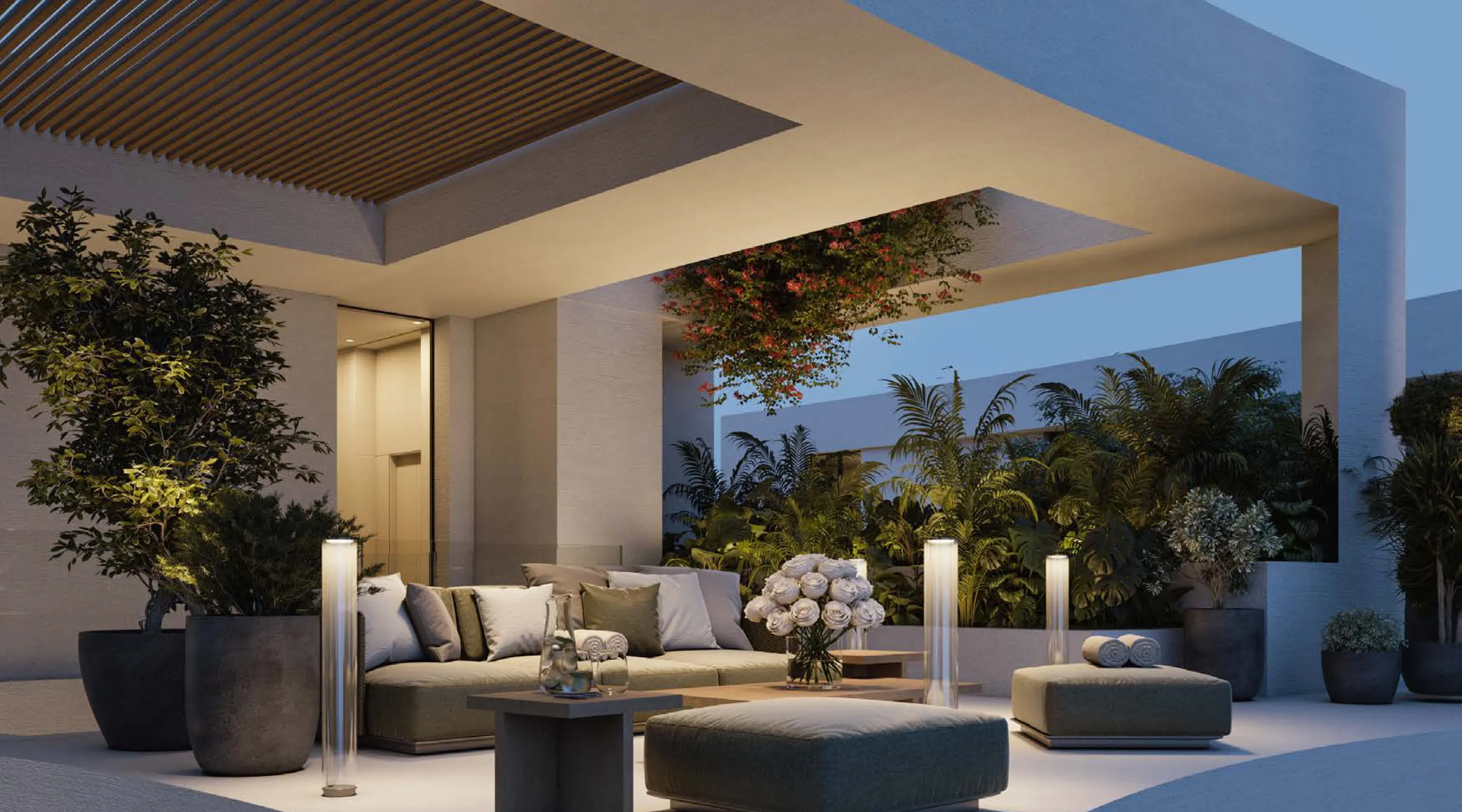
The third reference is Provence, specifically the inland villas of the Luberon and the hills above Aix-en-Provence. The Provencal signature is less about the building and more about the relationship between the building and its garden: the terrace as an outdoor living room, the pergola as a structural element, the planting as architecture in its own right. Cypress lines, olive trees, lavender beds and aromatic herbs are not decoration but program.
At Lunaya, the Provence reference is encoded in the master plan: 65 percent of the site is green, with 900,000 square feet of lagoons and a planting strategy that uses Mediterranean species suited to the local climate. Each villa receives a private landscaped garden, with pergolas, mature trees and direct lines of sight to the lagoons. The garden is not an afterthought sized to whatever the building leaves behind. It is designed as a continuation of the living space.
What this signature delivers in Dubai
The Mediterranean stance solves three problems that the standard Dubai villa often leaves open. The first is the climate response: deep loggias, light facades and dense planting reduce direct solar gain and keep the perceived temperature inside the villa lower, which translates into lower cooling load and a more comfortable summer. The second is the visual fatigue: the muted palette and slow proportions do not date in three to five years like the more aggressive contemporary signatures.
The third problem is identity. Buyers who have lived in southern Europe or who travel there regularly recognise the visual code immediately, and the recognition matters because Lunaya is positioned as a primary residence, not a speculative buy. The villa needs to feel like home from day one, not after three rounds of redecoration. That is what the Mediterranean signature delivers: a residence that reads as inhabited from the moment the keys change hands. More details on the typologies and the project sit at lunaya-by-zaya.ae.
What a buyer should remember
The Mediterranean influence at Lunaya is not a marketing accent. It is a structural design choice that determines facade material, opening depth, ceiling material, garden program and climate response. For a buyer who wants a Dubai villa that does not look like the rest of the Dubai catalogue, Lunaya offers a coherent and defensible alternative, with a signature that holds across decades rather than seasons.