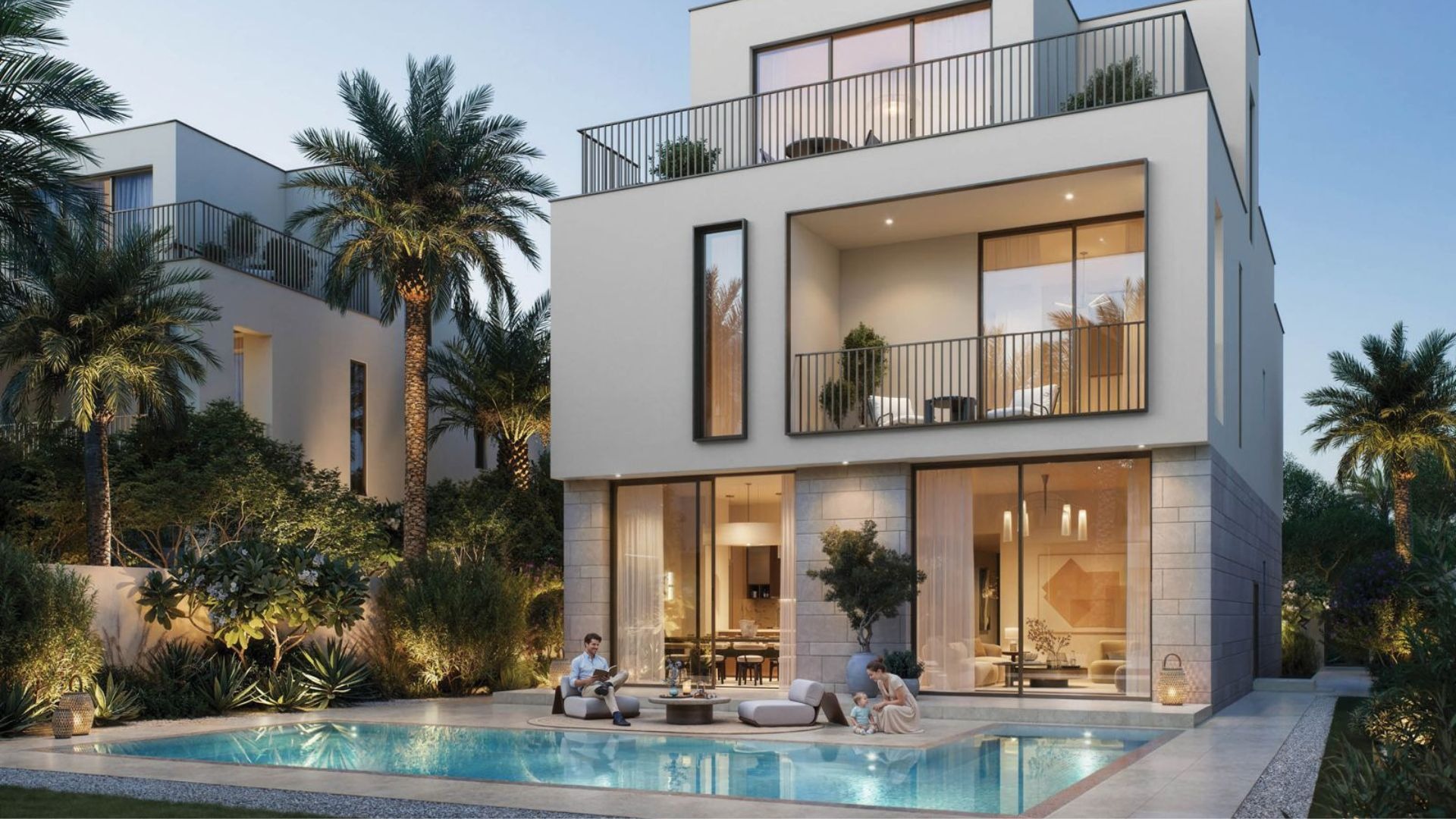
Wiederverkaufswert in Dubai South: warum The Heights für den langen Lauf gebaut ist
Der Wiederverkaufswert ist die am stärksten unterbewertete Frage beim Kauf einer Dubai-Villa. Die meisten Käufer fokussieren auf Kaufpreis, Zahlungsplan und Mietrendite. Das dritte Bein der Rendite, die Kapitalwertsteigerung beim Wiederverkauf, wird als Residual behandelt. Für The Heights by Emaar in Dubai South ist dieses dritte Bein das strukturell interessanteste, weil das Gebiet am Schnittpunkt dreier langfristiger Treiber liegt, die historisch die Dubai-Wiederverkaufspreise am stärksten bewegt haben: ein Flaggschiff-Flughafen, ein permanenter Expo-Footprint und ein Inter-Emirate-Schienennetz.
Wie der Wiederverkaufswert in Dubai festgelegt wird
Dubai-Wiederverkaufspreise sind transparent. Das Dubai Land Department (DLD) veröffentlicht Transaktionsregister für jeden registrierten Verkauf, mit Immobilientyp, Gebiet, Größe und Preis. Broker, Investoren und Analysten nutzen die DLD-Datenbank als offiziellen Preisreferenzpunkt. Es gibt keinen Off-the-Books-Markt für den Großteil der Dubai-Wohntransaktionen: Jeder Verkauf taucht letztlich im DLD-Register auf und nährt den Benchmark.
Diese Transparenz zählt beim Wiederverkauf, weil sie die Informationsasymmetrie beseitigt, die viele internationale Märkte plagt. Ein Verkäufer bei The Heights in 2030 verhandelt gegen eine Evidenzbasis vergleichbarer Transaktionen in Dubai South, mit öffentlichen Registern, die der Käufer verifizieren kann. Der Nachteil ist, dass der Markt Fundamentaldaten schnell einpreist; der Vorteil ist, dass Fundamentaldaten vorhersehbar belohnt werden.
Off-Plan vs Ready: die Wiederverkaufsarbitrage
Für einen Off-Plan-Käufer bei The Heights hat das Wiederverkaufsgespräch zwei Phasen. Die erste Phase ist das Vor-Übergabe-Fenster, in dem der Käufer den Vertrag an einen neuen Käufer im sekundären Off-Plan-Markt abtreten kann. Die Preisgestaltung in diesem Fenster wird vom Baufortschritt, der Marktstimmung zu Dubai South und der Differenz zwischen ursprünglichem Kaufpreis und aktuellem Launch-Preis vergleichbaren Bestands getrieben.
Die zweite Phase beginnt bei Übergabe, wenn die Villa zu einem Ready-Asset wird und im standardisierten DLD-Sekundärmarkt gehandelt wird. Ab da wird der Wiederverkaufswert gegen vergleichbare übergebene Villen in Dubai South gebenchmarkt. Die Arbitragechance für den Off-Plan-Käufer ist die Lücke zwischen dem ursprünglichen Off-Plan-Preis und dem Ready-Asset-Marktpreis bei Übergabe; in Emaar-Communities ist diese Lücke historisch positiv und kumulativ zweistellig über einen typischen Bauzyklus gewesen.
Treiber 1: Al Maktoum International Airport
Al Maktoum International Airport ist der folgenreichste Infrastrukturtreiber der Dubai-South-Immobilien. Das 35-Milliarden-Dollar-Ausbauprogramm ist darauf ausgelegt, eine Passagierkapazität zu liefern, die letztlich Dubai International übertreffen und ihn zum größten Flughafen der Welt machen wird. Die phasenweise Lieferung bringt Zehntausende permanente Arbeitsplätze in die Region, plus die Lieferketten, den Hospitality-Footprint und die Wohnungsnachfrage, die jedem großen Aviation-Hub folgen.
Für The Heights ist der Flughafen sowohl ein gegenwärtiger als auch ein künftiger Treiber. Gegenwärtig, weil die Luftfahrt-Belegschaft bereits Dubai South bevölkert. Künftig, weil die langfristigen Passagier- und Frachtvolumina das Wohnnachfrageprofil vervielfachen werden. Käufer, die The-Heights-Villen während der Flughafenhochlaufphase halten, sind positioniert, den Aufzinsungseffekt auf die Preise einzufangen.
Treiber 2: Expo City Dubai
Expo City Dubai ist das permanente Erbe der Expo 2020. Das 4,38-Quadratkilometer-Gelände wird als Mixed-Use-Community entwickelt, die Wohnen, Gewerbe, Kultur und Bildung kombiniert, wobei die ursprünglichen Expo-Pavillons in ein Langzeitprogramm aus Ausstellungen, Headquarters und öffentlichen Attraktionen umgewidmet wurden. Die Stadt ist ein permanenter Nachbar von The Heights, drei Kilometer entfernt.
Permanente Expo-Footprints sind in der Immobiliengeschichte selten. Die meisten Expos verschwinden nach der Veranstaltung. Die Entscheidung Dubais, das Gelände in ein 25-Jahres-Programm zu überführen, schafft eine nachhaltige Aktivitäts-, Beschäftigungs- und Sichtbarkeitsquelle, die dem gesamten Dubai-South-Einzugsgebiet zugutekommt. The Heights nimmt diese Nähe als strukturellen Rückenwind beim Wiederverkauf mit.
Treiber 3: Etihad Rail
Etihad Rail ist das föderale Schienennetz, das letztlich alle sieben Emirate verbinden und sich mit dem saudischen Schienennetz integrieren wird. Der Passagierdienst wird die Inter-Emirate-Mobilität transformieren, mit Reisezeiten zwischen Abu Dhabi, Dubai und den nördlichen Emiraten, die für Tür-zu-Tür-Fahrten mit dem Flugzeug konkurrieren werden. Dubai South ist positioniert, einen großen Bahnhof zu beherbergen, gegeben die Flughafenadjazenz.
Für einen Heights-Käufer erweitert Etihad Rail das Einzugsgebiet der Community weit über Dubai hinaus. Abu-Dhabi-Pendler, Sharjah-Fachkräfte und Wochenendreisende aus der weiteren Region werden zu einem potenziellen Publikum sowohl für Miet- als auch für Wiederverkaufsnachfrage. Wenige Dubai-Masterpläne profitieren von dieser Multi-Emirate-Integration, einer der Gründe, warum institutionelle Analysten Dubai South als strategische langfristige Zone behandeln.
Angebotsdisziplin und die Emaar-Prämie
Der Wiederverkaufswert hängt auch von der Angebotsdisziplin ab. The Heights wird von Emaar Properties geliefert, deren Track Record bei Arabian Ranches und Dubai Hills Estate zeigt, dass begrenzte Release-Phasen, kontrollierte Preise und konsistente Bauqualität die Wiederverkaufswerte über die Zeit schützen. Die Communities, die Emaar vor fünfzehn Jahren lieferte, verlangen heute auf dem Sekundärmarkt immer noch Prämien gegenüber vergleichbarem Bestand.
Für langfristige Halter gilt die gleiche Logik für The Heights. Community-Preise, verfügbare Phasen und kommende Launches werden auf the-heights-residence.ae verfolgt. Eine Langfrist-Wiederverkaufsstrategie baut nicht auf Vermutungen: Sie baut auf diesen Fundamentaldaten auf, die sich kumulieren.